The Leadership Guide · Chapter 1
Leadership from the inside out: character, awareness and daily influence
Focus areas 2, 6, 7: Self and team awareness; Leadership from the inside out; Winning is an inside job.

The seat does not make you a leader. It makes your inner life public. That is the part nobody puts in the appointment letter.
I work three ideas as one piece of work, because they fail when you split them. Self and team awareness is the instrument panel: what you can see about how you land, and what the table can see about itself. Leadership from the inside out is the engine: character, values, the person you are when the pack is closed. Winning is an inside job is the training week: the private habits that decide whether the room gets a composed operator or a tired performance.
If you only do awareness, you collect adjectives and change nothing by Thursday. If you only do character talk, you become pious while the organisation still cannot predict you. If you only grind habits, you get efficient at the wrong game. Held together, they are how influence becomes something people can feel without a speech.
I have run businesses across more than twenty countries. I have also sat beside people who could not hear how they closed a meeting. The commercial story was rarely the live problem. The live problem was an inner pattern leaking into every decision, every silence, every hiring call. Gallup has shown that managers account for at least 70 per cent of the variance in engagement scores, and that one in two adults in a study of 7,272 people had left a job to get away from their manager. You can buy another offsite. You cannot outsource the person the room is actually following.
This chapter opens the Leadership Guide because everything else sits on it. You will not find the things you cannot see if you will not look. You will not pay the price tag of the seat honestly if you treat character as a branding exercise. I have a shorter field note on why self and team awareness pays board-level dividends. What follows is the longer conversation I have in the room.
Self and team awareness
Most senior people I meet are not stupid about themselves. They are busy, and they have been rewarded for a version of themselves that used to work. Awareness is not a personality test. It is the gap between intent and impact, named often enough that you can do something about it this week.
Tasha Eurich put a hard number on the vanity of the inner story: 95 per cent of people believe they are self-aware, yet only 10–15 per cent actually are. Read that twice if you hold a heavy seat. The sample is not “other people”. It is the human default. The more power you have, the fewer people will correct you, and the more the 95 per cent starts to feel like evidence.
I do not use that figure to humiliate anyone. I use it to stop the argument. If your self-picture and the room’s picture disagree, the room is running the company. You are running a private film.

A closed journal on a windowsill. The useful page is written before the room fills.
What the room already knows
Take an example. Imagine a CEO who is proud of pace. In their own telling, they “cut through noise”. Direct reports experience the same behaviour as decisions arriving before the downside has been said. Nobody is lying. Both descriptions can be true of the same ten minutes. Awareness is the discipline of holding both, then choosing which behaviour the organisation can afford.
Team awareness is the same move at table scale. A leadership team that cannot describe its own habits will keep importing new process to fix a pattern it will not name. I have watched groups install a new operating cadence every two quarters because they would not say the quieter sentence: we do not disagree in the room, so we disagree in the corridor.
That is why I treat awareness as a pair. Self without team becomes rumination. Team without self becomes a workshop that nobody owns. Together they are a dashboard: one personal pattern in plain English, two or three repeating team habits, and a cue you can inspect after a real meeting.
Gallup’s engagement research is not a culture poster. Seventy per cent of the variance in a team’s engagement is related to management. If you are the manager of managers, that is not a statistic about “them”. It is a statistic about how your working week lands three layers down. People do not leave strategy. They leave the experience of being led.
Clean data, not a mood
Self-perception is biased by design. I start with more than one angle: a small inner circle, a structured 360 when the trust can hold it, talk-time notes from a meeting, the last three decisions that had to be reopened. Clean data collapses debate. It replaces “I think I am approachable” with “three people waited until Friday to tell you the miss”.
I do not outsource judgement to a report. Psychometrics and surveys are instruments. You still have to say what the pattern is in a sentence a non-executive could repeat. If you need a cloud of adjectives, you do not have a pattern yet. You have a weather system.
The move I want in the first fortnight is smaller than a transformation programme. Ask two people who see you under pressure: “When I am at my worst in a meeting, what do I actually do?” Then write their words, not yours. If you argue with the transcript, you are protecting the 95 per cent.
On the team side, the equivalent is a post-meeting debrief that is on the agenda, not a corridor hobby. Two questions are enough. What did we just reward. What did we make expensive. If those questions feel rude, you have your diagnosis. Candour is not a vibe. It is a protocol. I write about the mechanics of speak-up among people with power in other places; here the point is simpler. A team that cannot see itself will keep buying tools to avoid a conversation.
| Practice | For you | For the table | What “done” looks like in 30 days |
|---|---|---|---|
| Gather data | Two private interviews plus one recorded meeting | Talk-time notes and a one-question pulse after a decision | You can quote someone else’s sentence about your impact |
| Name the pattern | One behaviour in plain English, not a trait | Two repeating team habits, named without blame | A visitor could repeat the pattern after one meeting |
| Install a cue | A physical interrupt (pen down, question first) | A standing opener: “What could derail us?” | The cue happens without a facilitator in the room |
| Close the loop | Write what you think they heard; ask one person | Five-minute debrief on the agenda, not optional | The second meeting is shorter than the first |
| Attach a number | Decision re-opens, not a personality score | Cycle time, rework, or who speaks after you | One leading indicator moved, even slightly |
None of that requires you to become a different human. It requires you to stop treating your self-picture as a protected asset. The organisation is already paying for the gap. Awareness is how you stop invoicing them twice.
If the live problem is not “I cannot see myself” but “the table will not say it”, the cousin chapter is leadership blind spots. Awareness is the willingness to look. Blind spots are the specific panes you still cannot see. Do not mix the two and then wonder why a 360 changed nobody’s working week.
Leadership from the inside out
Inside-out is not a mood board. It is a claim about cause and effect. The room receives who you are under load, then it receives your slides. If those two messages disagree, people follow the first and nod at the second.
Daniel Goleman, writing from research at nearly 200 large global companies, treated emotional intelligence as the sine qua non of leadership — the thing without which the rest does not hold. IQ and technical skill get you in the door. What distinguishes people who can actually lead, in that research, is the inner kit: self-knowledge, self-regulation, motivation, empathy, social skill. I do not need you to memorise the labels. I need you to notice that the commercial world has been circling this for decades, then still trying to fix it with a better deck.
I call the working model Inside-Out Leadership because I have never seen outside-in last. You can hire a voice coach, a tailor, a communications firm. I have watched expensive presence work collapse the moment a real trade-off enters the room. Presence is a decision discipline. Character is why the decision is trusted when it hurts.
The organisation does not follow your vision statement. It follows the person you are when the statement is tested.
Character is a constraint, not a costume
Character, as I use it, is the set of promises you keep when it would be cheaper not to. It is not branding. It is not “values on a wall”. It is whether people can predict you on a bad Wednesday.
When I was running businesses, the people I would follow into a messy market were not the most charming. They were the ones whose no stayed a no after the meeting, whose yes came with a name and a date, who did not need an audience to hold the standard. Charm without that is a tax. Competence without that is a ticking clock.
Take an example. Imagine a commercial lead who prides themselves on loyalty to the team. In practice, they never name a miss in public, so the rest of the organisation learns that performance is negotiable if you are liked. The inner story is care. The outer system is drift. Inside-out work is not asking them to become cruel. It is asking them to let care include the people who are carrying the ones they will not confront.
That is why I am impatient with “bring your whole self to work” when it is used as a shield. The seat does not want your unedited weather. It wants a person whose inner life has been trained enough that other people can build on it. Whole, yes. Unexamined, no.
The personal mastery writing on this site sits here: energy, attention, the private scoreboard. You cannot lead from the inside out if the inside is running on fumes and unmade calls. Character includes how you recover, not only how you perform.
The authenticity trap
Herminia Ibarra named a pattern I meet constantly in people who have just taken a bigger seat. They try to “be themselves” by repeating the behaviour that won the last job, then call any new behaviour fake. Her Authenticity Paradox is the warning: a rigid story about the true self becomes a cage. Growth requires you to act your way into a new identity, not wait until it feels natural.
I have no interest in making anyone theatrical. I have interest in stopping a senior person from using “that’s just me” as a veto on the one behaviour the organisation now needs. Directness that used to be a gift becomes a blunt instrument in a larger system. Loyalty that used to be a gift becomes protection of the wrong people. Pace that used to be a gift becomes a room that cannot think.
Inside-out, in practice, is a through-line of values plus a willingness to change the move. You do not abandon yourself. You stop confusing a familiar tactic with a soul.
| Outside-in move | What it tries to buy | What the room actually receives | Inside-out replacement this week |
|---|---|---|---|
| Media training before a messy call | Composure as performance | A polished person with an unmade decision | Write the one-sentence ask; then rehearse |
| A values offsite with no trade-offs | Moral atmosphere | Cynicism — everyone can smell the unkept promise | Name one value that will cost someone a bonus |
| “Be more authentic” as feedback | Relief from effort | Permission to stay unchanged | Ask: which behaviour must I practise that still feels foreign? |
| Another layer of process | Control without inner work | Meetings that perform alignment | Open with the derailer, not the update |
| Hiring a spokesperson for culture | Distance from the real problem | A story nobody in the business recognises | Change one visible behaviour of yours for 30 days |
If this section sounds stern, it is because I respect the isolation of the job. The seat is lonely. That is not a character flaw. It is the job, unless you design support. Inside-out work without a trusted other becomes either self-attack or self-mythology. I would rather you had one person who can say, after a board, “you left the downside on the floor”, than a stack of books about purpose.
And if the live problem is stamina rather than sight, go to the price tag of leadership. Character that cannot recover is not character. It is a countdown.
Winning is an inside job
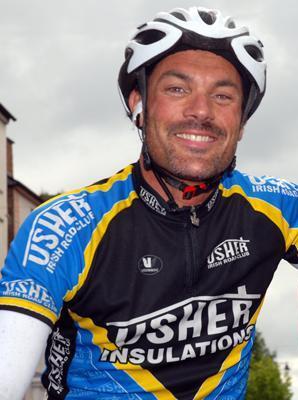
I won the Irish National Cycling Championship. I do not tell that story to decorate a website. I tell it because I learned, the hard way, that the result is a lagging indicator. The race is decided in the hours nobody applauds: sleep, fuel, the ugly interval session, the willingness to be coached when your ego wants a narrative. Boardrooms are not velodromes. The physics are related. You do not rise to the occasion. You fall to the level of your private practice.
Winning, as I use it here, is not a trophy. It is the organisation getting the leader it was promised when the week gets tight. That is an inside job because nobody can do the private reps for you. They can only live with the public consequences.

An empty track at dawn. The work that decides the race is done before anyone takes a seat.
The private scoreboard
I ask people to keep a scoreboard that would look embarrassing in a strategy pack. Did I sleep. Did I keep the one conversation I named. Did I open a meeting with the decision rather than a tour. Did I recover, or did I just persist. These are not wellness accessories. They are how you remain a usable instrument.
Gallup’s feedback research is the commercial cousin of that scoreboard. Eighty per cent of employees who received meaningful feedback in the past week are fully engaged. People who get daily feedback are 3.6 times more likely to strongly agree they are motivated to do outstanding work than people who get it once a year. Annual reviews are a ceremony. Weekly, even daily, contact is how a standard stays alive.
I am not asking you to hover. I am asking you to stop starving the organisation of the one thing that turns inside-out character into a culture: a short, specific loop. Meaningful is the word that matters. “Good job” is noise. “The way you named the downside before the upside changed the quality of that call — do that again on Thursday” is fuel.
If you want a named method, I use a Trusted Feedback Loop: a small inner circle, a standing question, a behaviour to start or stop, a date to look again. It is not a 360 theatre. It is closer to a training diary. Athletes would not dream of waiting twelve months to find out whether the session worked. Executives do it all the time, then look surprised when the organisation has drifted.
What this looks like in practice
Do not wait for a programme. Change the next two meetings.
Write, before you walk in, the one sentence you want the room to be able to repeat. If you cannot write it, you do not have a recommendation. You have a tour. That is presence, and it is also inner work: you have to decide before you perform.
Ask a trusted colleague to mark the moment you started explaining instead of deciding. That timestamp is more useful than a cloud of 360 adjectives. It is awareness with a clock on it.
After the meeting, write what you think they heard. Then ask one person. The gap is the job. Close the gap; do not decorate it.
Once a week, look at the private scoreboard with the same seriousness you bring to cash. If you only inspect the inner life when you are already in trouble, you will treat coaching as emergency medicine. I would rather you treated it as training.
| Cadence | What the organisation learns | Risk if this is your only mode | Inside job for you |
|---|---|---|---|
| Daily, short and specific | Standards are live | Hovering, if you confuse contact with control | One sentence of observed behaviour, not a mood |
| Weekly, meaningful | Engagement has a pulse — Gallup’s 80 per cent sits here | Becomes a ritual if you never name a miss | A standing 15 minutes with your inner circle |
| Quarterly, deep | Patterns, not incidents | Too late for the quarter you are in | One pattern retired, one practised |
| Annual, ceremonial | That feedback is a HR event | The 3.6× gap versus daily contact | Keep it for compensation, not for growth |
Sport taught me something else that transfers without being forced. Recovery is part of the work. A champion who cannot recover is not tough. They are one crash from being unavailable. The same is true in the seat. Winning from the inside includes sleep, the walk, the person you can tell the truth to, the decision you will not make after 10 p.m. because you already know the quality drops. If that sounds soft from a former CEO, look at the weeks when you did the opposite and tell me the organisation got your best judgement.
Questions to sit with
Sit with these before you book anything. Write the answers in sentences you would not be ashamed to read aloud.
- What do I think I am like under pressure, and what would the last meeting say if it could talk?
- Which of my strengths is the organisation now paying for as a tax?
- Who, by name, is allowed to tell me I am wrong in the same week — and when did I last reward them for it?
- What behaviour am I refusing because it does not feel like “me” yet?
- If winning this quarter were an inside job, what would I change in the next seven days that nobody else can do for me?
If you want the next cluster in this guide, go to leadership blind spots and look at the panes you still cannot see. If the pressure is cost, stamina and the plan you will actually keep, go to the price tag of leadership.
I do not guarantee that a board will feel you differently in six sessions. I can tell you whether your inner picture and the room’s picture moved closer together, and whether your practical behaviour changed. That is the work.
Book a confidential 30-minute conversation and bring the last meeting that went muddy. We will start with how you land, not with a costume.
The series
- Part 2 of 30Self and team awareness
- Part 6 of 30Leadership from the inside out
- Part 7 of 30Winning is an inside job
One in-depth article per focus area. See all 30 parts.
Questions I am asked
Is inner work a substitute for strategy?
No. Strategy that cannot survive contact with your actual behaviour is a slide. Inner work is how the organisation stops paying for the gap between the pack and the person. If your strategy is already clear and the room can predict you, keep the habit that made that true — do not add a programme for theatre.
How do I know this is an awareness problem rather than a talent problem?
Talent problems show up as missing skill in a named domain. Awareness problems show up as the same collision repeating with different people. If three capable colleagues describe your impact in the same sentence and you are surprised, it is not a hiring issue. It is a mirror issue.
What if my team will not tell me the truth?
Then you already have data: the cost of candour is higher than the cost of silence. That is on the chief executive, not on their courage. Start smaller than a 360. Ask one person, after one meeting, what the room heard. Reward the answer in the next hour, not in a speech six weeks later.
Does being authentic mean I should stop adapting?
No. A frozen self is not integrity. Herminia Ibarra’s point is that clinging to “this is just who I am” is how people fail the next seat. Character is a through-line of values, not a ban on new behaviour. Practise the behaviour the role requires, then let identity catch up.
How does this sit with executive presence?
Presence is how your judgement lands under scrutiny. If the decision is mush, no jacket will save it. Character and awareness are upstream of presence; costume work is downstream and it fails first. I would rather clean the ask than rehearse the pause.
Do I need a coach for this, or can I do it with my team?
Some of it you can do this week with a trusted inner circle and a written loop. Coaching belongs when you cannot see the pattern, when the table will not name it, or when the seat is too lonely for you to be a reliable instrument. I will not take a brief that is only performance for the board.
Sources
Elite executive coach
Book a 30-minute strategy call
In this guide: Chapter 2: Leadership blind spots; Chapter 5: The price tag of leadership.