The 30-part series · Part 3 of 30
Define leadership blind spots: find the point where a strength tips over
Focus area 3: Define leadership blind spots. Chapter 2: Leadership blind spots.
Part of the Executive Coaching Methodology: See what you cannot see

Most of the blind spots I work on with chief executives were once the reason they got the job. The confidence that carried a turnaround. The patience that kept a fragile team together. The rigour that caught the error nobody else saw. Nobody promoted them for a flaw. They promoted them for a strength, and then the context moved and the strength kept running at the same setting.
That is why the word “blind spot” so often produces a polite shrug in a leadership team. People imagine a hidden vice. When they cannot find one, they conclude they are clear. Meanwhile the room is watching confidence drift into overreach, or patience start to look like indecision, and nobody has found a way to say so without sounding ungrateful.
So here is my claim. Most leadership blind spots are not hidden flaws but familiar strengths that have tipped past their useful edge. You have defined one only when you can name the strength, the condition that tips it, the behaviour other people see, what it costs, and the cue that pulls you back. Anything less specific is fog, and fog cannot be worked on.
This article goes deeper on the first move in the chapter on leadership blind spots. The chapter sets out what a blind spot is and is not. Here I want to stay with the definition itself: how to locate the edge, and how to write it down so it becomes something you can practise against.
Why the edge is invisible from the top job
If blind spots were easy to see from the inside, we would not need the word. Three findings explain why the top job is the worst seat for this particular view.
The first is that almost everyone overrates their own clarity. Tasha Eurich’s research team found that although 95% of people think they are self-aware, only 10 to 15% actually are. Her earlier summary of the same programme adds the part that matters for senior people: experience and power can hinder self-awareness, and introspection does not always make you more self-aware. The longer you have been successful, the more confident your self-assessment, and the less that confidence is worth.
The second is that we see bias in other people far more readily than in ourselves. In three studies, Emily Pronin and colleagues found that people rated themselves as less subject to a range of biases than the average American, and that those showing the better-than-average effect insisted their self-assessments were accurate even after reading how the bias could have affected them. Being told about the blind spot did not remove it. That is a sobering finding for anyone who thinks a single feedback session is enough.
The third is closer to the boardroom. When Jack Zenger and Joseph Folkman compared 360-degree data from more than 11,000 leaders with the profiles of fired executives, they found the least effective leaders were often unaware that they exhibited these behaviours, and those rated most negatively rated themselves substantially more positively. The gap between how you see yourself and how you land is not random. It is widest where it is most expensive.
Add power to the mix and the gap widens again. Dacher Keltner’s research over two decades describes a pattern in which people gain power through empathy, collaboration, openness and fairness, and those qualities begin to fade once they feel powerful. The qualities that earned the seat are the ones most at risk in it. That is the strength edge in one sentence.
A blind spot is a strength past its edge
The most useful reframe I know is to stop hunting for faults and start mapping strengths. Every strength has a sweet spot, where it serves the organisation, and an edge, past which it starts to cost more than it returns. The blind spot sits just beyond the edge. You still feel the strength. The room already feels the cost.
The edge is rarely fixed. It moves with conditions: time pressure, a public setback, a pet project, a board meeting next week, a new executive you do not yet trust. That is why the same leader can be measured on Monday and overbearing on Thursday. It is not inconsistency of character. It is a strength responding to a trigger.
| Strength | In the sweet spot | Past the edge | What the room sees | A simple cue |
|---|---|---|---|---|
| Confidence | Clear calls, steady room | Overreach: commits before the facts are in | Plans that assume the best case | A pause: what would change my mind? |
| Patience | Space for people to grow | Indecision: the call drifts a quarter | The same item on every agenda | A date: decide by Friday, or say why not |
| Rigour | Errors caught early | Review loops that stall the work | Teams waiting for one sign-off | A threshold: what is good enough to ship |
| Care | People feel backed | Rescuing: problems taken off their desks | A team that escalates instead of owning | A question: what would you do? |
| Candour | Problems named fast | Bluntness that silences | Fewer ideas, offered later | A second pair of eyes before the hard message |
Read across one row and you have most of a definition. Notice that the cue column is small on purpose. A pause, a probing question, a second pair of eyes. I am not asking anyone to become a different person. I am asking them to install a speed bump at the exact point where the strength tips over.
Write the definition in five parts
A definition you can practise against has five parts. Leave one out and it slides back into fog.
- The strength. Name what is genuinely good about it, because that is why you will defend it. I make fast, confident calls.
- The condition. The trigger that tips it. When a board meeting is less than a week away.
- The behaviour. What a colleague could timestamp. I commit to numbers in the room before finance has checked them.
- The cost. What the system pays. We reforecast twice a year and the finance team has stopped challenging me early.
- The cue. The small action at the edge. Before I commit to a number, I ask the chief financial officer what would make it wrong.
Put together, that is one paragraph a non-executive director could read aloud and recognise. It is also one paragraph you can check in a week: did the condition arrive, did the cue fire, did the cost move?
The practical version is simpler still. Before your next leadership meeting, pick the strength you lean on most. Ask yourself in which meeting this week it is most likely to tip. Write the cue on the first page of your notes for that meeting. That is the whole intervention for week one.
Two cautions. First, write the behaviour in other people’s words, not yours. You will describe overreach as decisiveness; your team will describe it as being told the answer. Their wording is the one that matters, because it is the one that describes what lands. Second, do not let the condition become an excuse. Only under pressure is not a mitigation for a chief executive. Pressure is most of the job.
There is a reason sport is useful here. In cycling, a rider at full effort cannot feel the small change in position that a coach can see from the car, and the cost shows up later as lost watts or a sore back. Elite athletes accept that the view from outside is better than the view from the saddle. Leaders tend to resist the same arrangement, which is why I write about what elite sport teaches the boardroom as a matter of method, not inspiration.
Arguments
The case for
Defining a blind spot as a strength past its edge does three useful things. It lowers defensiveness, because you are not being asked to confess a vice. It makes the pattern observable, because a condition and a behaviour can be watched where a trait cannot. And it points straight to a cue, because the fix is a speed bump at the edge rather than a personality change.
The evidence supports the need for outside eyes. Self-assessments are confident and often wrong, especially in experienced and powerful people, and the leaders rated lowest by others tend to rate themselves higher. Pronin’s work shows that explaining the bias does not dissolve it. A definition built on colleagues’ observations of a specific condition is the most practical response I know to that problem.
The case against
The strongest objection is that this framing is too kind. Some behaviours are not strengths at all. Contempt, dishonesty and bullying are not confidence past its edge, and calling them a blind spot lets the leader off the hook. That objection is right, and I take it seriously. If a behaviour would be wrong at any setting, it is a standards problem, not a calibration problem.
A second objection is that defining the edge can become another clever exercise. Leaders who enjoy self-analysis can spend months refining the paragraph and never change the meeting. A third is that the room can be wrong. Teams under strain sometimes project their frustration on to the chief executive, and a leader who rebuilds around every complaint will lose the clarity people need.
Where I stand
I hold the strength-edge definition as the default, with two firm limits. If a behaviour would be harmful at any setting, I name it as a standard to meet, not a blind spot to explore. And if the definition is not written within two sessions, we stop refining and start testing the cue, because the test will teach us more than another draft.
This is the work of step 2, Awareness, in my 7-step coaching process, and it depends on step 1, Vision, having set ground rules for honest feedback first. Without those ground rules, colleagues will not describe the edge truthfully, and the definition will reflect what they think you want to hear. With them, a single well-written paragraph often does more than a thick assessment report. When the edge sits inside the senior team’s dynamics rather than one person, I move the work to executive team coaching.
Try this
Run this over the next fortnight. It takes less than two hours of your time in total.
- Pick one strength. The one you would mention first if asked why you got the job.
- Ask three people one question. Choose colleagues who do not compare notes. Ask: When does this strength of mine stop helping you? Write their answers down verbatim and do not reply beyond thanks.
- Find the condition. Look for the situation that appears in at least two answers. That is your edge.
- Write the five-part definition. Strength, condition, behaviour, cost, cue. One paragraph, in their words where you can.
- Run the cue in two live meetings. Choose meetings where the condition is likely to arrive.
- Go back to one of the three. Ask whether they noticed anything different. Note what they say, not what you hoped.
Then sit with these questions:
- Which of my strengths do I defend fastest when it is questioned?
- In which recurring meeting does that strength most often tip over?
- What would the person who reports to me most nervously say the cost is?
- What is the smallest cue that would catch me at the edge?
- Who could I give permission to name the edge out loud, in the room?
Where to go next
Once you have one blind spot defined, the next question is whether it is one of the familiar patterns. Most are. I set out the three I see most often in senior seats, with a counter-routine for each, in common leadership blind spots. When you are ready to take one off the road, the weekly loop and scoreboard are in remove leadership blind spots. If you want the groundwork underneath all three, start with self and team awareness. And if the edge you find turns out to be a gap between the rules you say you lead by and the ones you actually live by, leadership from the inside out shows how to write those rules down and test them.
If you would rather do this with someone who will hold the definition steady while you test it, that is the core of my executive coaching. Book a 30-minute strategy call and bring the strength you think got you the job. We will find its edge together.
Questions I am asked
Is a blind spot just another word for a weakness?
No. A weakness is something you are not good at and usually know about. A blind spot is more often something you are good at, used past the point where it helps, in a way you cannot feel. That is why it survives: your own evidence says the strength is working, while the room is quietly paying for it.
How do I find the edge if I cannot see it?
You borrow other people’s eyes and you look for conditions, not traits. I ask three colleagues when a particular strength of mine stops helping them. The answers usually cluster around one situation, such as time pressure, a public setback or a favoured project. That situation is the edge. You will not find it by introspection alone.
Should I define more than one blind spot at a time?
I would not. One well-defined blind spot with a working cue beats five vague ones on a development plan. Define the one that cost you most in the last quarter, run the cue for a month, and only then go looking for the next. Leaders who collect blind spots tend to admire the list and change nothing.
What if my team is wrong about me?
They might be, on detail. They are rarely wrong on pattern. If three people who do not compare notes describe the same moment in similar words, I treat that as data, not opinion. If only one person sees it, I keep it as a question and watch for it, rather than dismissing it or rebuilding myself around it.
Sources
- What Self-Awareness Really Is (and How to Cultivate It) — Harvard Business Review, 4 January 2018
- Working with People Who Aren’t Self-Aware — Harvard Business Review, 19 October 2018
- The Bias Blind Spot: Perceptions of Bias in Self Versus Others — Personality and Social Psychology Bulletin, March 2002
- Ten Fatal Flaws That Derail Leaders (archived) — Harvard Business Review, June 2009
- Don’t Let Power Corrupt You — Harvard Business Review, October 2016
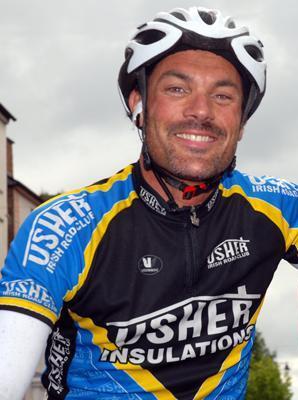
Elite executive coach. Linus spent 25+ years as a CEO in technology and services, where the businesses he led averaged 45% annual growth, and has coached hundreds of people from more than 20 countries. He is a former Irish National Cycling Champion.
Book a 30-minute strategy call
Related parts
 Part 4 of 30 · Chapter 2Common leadership blind spots: selective listening, silo loyalty and hero syndrome
 Part 5 of 30 · Chapter 2Remove leadership blind spots: a weekly loop, a small test and a scoreboard
 Part 2 of 30 · Chapter 1Self and team awareness: clean data on how you actually land
 Part 6 of 30 · Chapter 1Leadership from the inside out: write the rules you already live by