The 30-part series · Part 30 of 30
Make tough decisions: sort the door before you walk through it
Focus area 30: Make tough decisions. Chapter 9: Trust under pressure.
Part of the Executive Coaching Methodology: Lead when it gets hard

Most of the tough decisions I see stuck on a CEO’s desk are not stuck because they are hard. They are stuck because they are being treated the same as every other decision. The pricing test gets the same steering committee as the acquisition. The senior hire waits for the same alignment meeting as the market exit. Everything moves at the speed of the heaviest call, and the organisation learns that deciding is slow, political and best left to the top.
The focus area behind this article says speed matters, but so does quality. I do not think those two pull against each other as much as leaders believe. What pulls against both is running one process for every call. My thesis is simple: sort reversible from irreversible first. Decide the reversible ones fast and close to the work. Slow the irreversible ones down properly, with a pre-mortem and a kill criterion. Then communicate every decision so people move quickly and in the same direction.
The chapter on trust under pressure sets out four gates for a hard call: frame, options, irreversible cost and owner. This article takes the third gate and makes it the first question, because it changes everything that follows.
Sort the door before you walk through it
In his letter to shareholders published in April 2016, Jeff Bezos described two kinds of decisions. Type 1 decisions are consequential and irreversible or nearly so, one-way doors, and deserve slow, careful deliberation. Type 2 decisions are changeable and reversible, two-way doors, and should be made quickly by high-judgement individuals or small groups. His warning was that as organisations grow, they tend to use the heavy Type 1 process on most decisions, including Type 2 ones, and the result is slowness, unthoughtful risk aversion and too little experimentation.
That warning matches what the wider data shows. In a McKinsey Global Survey of 1,259 participants, only 20 percent of respondents said their organisations excel at decision making. Respondents reported spending 37 percent of their time making decisions, and 61 percent said most of that time is used ineffectively. Only 37 percent said their organisations’ decisions were both high in quality and fast. Senior leaders are not short of decisions. They are short of a way to sort them.
Sorting is a practical behaviour. Before any decision goes on an agenda, someone asks one question: if this turns out wrong, what would it cost to walk back through the door in 90 days? The answer routes the call.
| Two-way door (reversible) | One-way door (irreversible) | |
|---|---|---|
| Typical calls | Price tests, pilots, most mid-level hires, process changes, a new meeting rhythm | Exiting a market, a large acquisition, removing a senior leader, a public commitment, a values call |
| Who decides | The owner closest to the work, with a clear decision right | The CEO or the board, with the owner named for execution |
| Time box | Hours to a week | Days to weeks once framed, never open-ended |
| Safeguard | A review date and a simple measure of whether it worked | A pre-mortem, a written assumption and a kill criterion |
| How you communicate | A short note: what, who owns it, when we review | The decision, the reasons, what we gave up, what would change our mind |
| The common mistake | Sending it to a committee | Deciding it in a corridor because it feels urgent |
The table carries a quiet point about trust. When you take back reversible decisions you have delegated, you spend trust you need for the irreversible ones. People stop owning anything because they assume you will override it. That is why earning trust and making tough decisions are the same discipline seen from two sides.
Slow the one-way doors down properly
Slowing down does not mean a longer deck. Most extra analysis on a big call confirms what the team already wanted. What a one-way door needs is a structured attempt to find out how it fails, before you commit.
Gary Klein’s pre-mortem does that. He cites 1989 research showing that prospective hindsight, imagining that an event has already occurred, increases the ability to correctly identify reasons for future outcomes by 30%. The method is simple. The team imagines the decision has been made and has failed badly. Each person writes down, privately, why it failed. Then the reasons are shared and the leader decides which risks to address before committing.
What I like about the pre-mortem is not the risk list. It is the permission. In most senior teams, at least one person has serious doubts about a big call and will not say so, because disagreeing with the CEO in public looks disloyal. The pre-mortem turns doubt into the assignment. It also gives the CEO an honest read of where the team stands before the decision, not in the corridor afterwards.
Two more safeguards belong with every one-way door:
- A written assumption. The one thing you are betting is true, in a single sentence. If you cannot write it, you do not understand the bet yet.
- A kill criterion. The specific result, by a specific date, that would make you stop or reverse as far as you can. Without it, sunk cost makes the decision for you later.
None of this needs to take long. A pre-mortem is one meeting. An assumption and a kill criterion are two lines. The time goes on the conversation, not the paperwork. And when the people the decision affects push back, the work moves into handle resistance, which is a separate skill from deciding.
Communicate so people move fast and aligned
The focus area ends with a phrase I keep coming back to: communicate decisions so everyone moves fast, and aligned, towards true north. A decision that is made well and communicated badly is, from the organisation’s point of view, a decision that was not made.
Bain’s research gives this a commercial edge. Marcia Blenko, Michael Mankins and Paul Rogers surveyed executives at 760 companies and found that decision effectiveness and financial results correlated at a 95% confidence level or higher for every country, industry and company size in their sample. The companies most effective at decision making and execution generated average total shareholder returns nearly six percentage points higher than other firms. Their measure included execution, not just the quality of the call. Communication is where the two meet.
For a one-way door, I ask leaders to communicate five things in the first message: what we decided, why, what we gave up, who owns it, and what would make us look again. The fourth and fifth matter most. Naming the owner stops the decision from drifting back to the top. Naming what would change your mind tells people you are still listening, without reopening the call every Friday.
The other link is to direction. A decision that does not connect to the sentence the company can repeat looks arbitrary, however sound it is. If you have done the work to transfer vision effectively, you can explain any hard call in one line: this moves us towards the destination, and this is what it costs.
Arguments
The case for
The case is that sorting first improves both speed and quality. Reversible calls get made faster because they no longer queue behind irreversible ones. Irreversible calls get better attention because senior time is no longer spread across every small decision. The survey evidence suggests most organisations are neither fast nor good at deciding, and the research linking decision effectiveness to financial results suggests this is not a soft problem.
There is also a cultural benefit. When people see that reversible decisions are genuinely theirs, they take ownership. When they see that the big calls are tested properly and explained clearly, they trust them more, even when they disagree.
The case against
The strongest objection is that the line between reversible and irreversible is rarely clean. A price test seems reversible until a major customer locks in the trial price. A senior hire seems reversible until the person has rebuilt the team around themselves. Leaders can label a call reversible to justify moving fast on something they have already decided.
A second objection is that pre-mortems can be theatre. A team that knows the CEO has decided will produce safe, minor risks, and the ritual gives false comfort. A third is that in a real crisis there is no time for any of this. When the cash runs out on Thursday, you decide that morning, and the process is a luxury.
Where I stand
I accept that the line is blurred, which is why I ask about the cost of reversal in 90 days, not about whether reversal is theoretically possible. When in doubt, treat the people and reputation parts of a decision as one-way doors, even if the money part is reversible. That catches most of the cases that go wrong.
On theatre, the fix is the CEO’s behaviour, not the method. If you run the pre-mortem before you have decided, and act visibly on at least one risk the team raises, the next one will be honest. On crisis, I agree that the time boxes shrink. But sorting takes seconds, and a crisis is exactly when a team most needs to know which calls are theirs.
In the seven-step process, this sits in step 3, Challenges, where slow decision cycles are named as a design problem, and step 6, Impact, where decision speed becomes one of the leading measures on the dashboard. For a senior team that decides together, this is often the first piece of executive team coaching, because the sort only works if the whole team uses the same doors.
Try this: the decision sort
Do this with your leadership team in a single 90-minute session.
- List every open decision. Everything waiting on you or the team, however small. Most teams find between 15 and 30.
- Sort each one. For each decision, ask what it would cost to reverse in 90 days. Mark it as a two-way or one-way door. Disagree openly about the borderline cases.
- Give every two-way door an owner and a date. Hand it to the person closest to the work, with a time box of no more than a week and a review date. Take it off the leadership agenda.
- Run a 20-minute pre-mortem on the biggest one-way door. Everyone writes privately why it failed, then shares. Choose two risks to act on.
- Write the assumption and the kill criterion. Two lines each, for every one-way door still open.
- Draft the first message. What we decided, why, what we gave up, who owns it, and what would make us look again.
Then reflect:
- Which reversible decisions am I still holding, and why?
- Which irreversible decision am I treating as small because it is uncomfortable?
- When did I last change my mind on a big call because of something the team raised?
- How would my team describe the way decisions get made here?
Where to go next
This is the final numbered part of the series, and it closes the chapter on trust. The calls you make well spend the trust you built in earning trust, and many of them can only be made after the conversation in have tough conversations. If the decision is part of a larger change, the roadmap for creating change shows how to carry it through the organisation. For a shorter field note, read how CEOs decide better under pressure.
Racing taught me that the decisions that matter are made with incomplete information, at speed, and that the preparation beforehand decides whether you choose well. I write about how that transfers in from elite sport to the boardroom. If a one-way door is sitting on your desk, book a confidential conversation and we will run the pre-mortem together.
Questions I am asked
How do I know whether a decision is really reversible?
I ask what it would cost to undo it in 90 days: money, reputation, key people and time. If the answer is an awkward meeting and some rework, it is a two-way door. If it means losing people we cannot rehire, a public commitment we cannot retract, or capital we cannot recover, it is a one-way door, however small it looks on the slide.
Who should own a reversible decision?
The person closest to the information who will live with the result, not the most senior person in the room. My job is to make the decision right clear, set a short time box and agree when we will look again. If I keep taking reversible calls back, I teach the team to wait for me, and everything slows down.
Does a pre-mortem not just make people negative?
Run well, it does the opposite. It gives people permission to name risks they were already worried about, without looking disloyal. I keep it to one session, ask everyone to write privately first, and end by choosing which two or three risks we will act on. Then we decide and move.
What should I do when my team disagrees with a tough decision?
Hear the disagreement properly before the decision, not after it. Once I have decided, I explain the reasons, what would change my mind and when we will review. I do not need agreement. I need people to understand the call well enough to execute it and to tell me early if the evidence turns.
Sources
- Decision making in the age of urgency — McKinsey & Company, 30 April 2019
- 2015 Letter to Shareholders (Exhibit 99.1) — Amazon.com, Inc. (SEC filing), 5 April 2016
- Performing a Project Premortem — Harvard Business Review, September 2007
- The Decision-Driven Organization — Harvard Business Review, June 2010
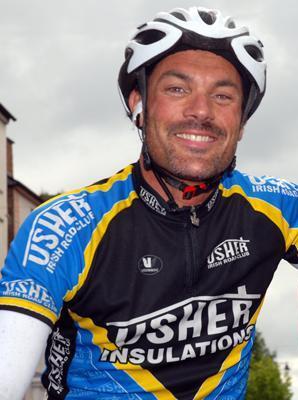
Elite executive coach. Linus spent 25+ years as a CEO in technology and services, where the businesses he led averaged 45% annual growth, and has coached hundreds of people from more than 20 countries. He is a former Irish National Cycling Champion.
Book a 30-minute strategy call
Related parts
 Part 21 of 30 · Chapter 9Earning trust: the three proofs people check before they back you under stress
 Part 19 of 30 · Chapter 6Handle resistance: treat pushback as unpaid design work
 Part 1 of 30 · Chapter 3Transfer vision effectively: the real test happens two levels below you
 Part 22 of 30 · Chapter 9Have tough conversations: hard truth, delivered well, deepens respect