The 30-part series · Part 9 of 30
Fatal flaws of leaders: ego, shortcuts and exhaustion, caught early
Focus area 9: Fatal flaws of leaders. Chapter 4: Why successful leaders stall.
Part of the Executive Coaching Methodology: See what you cannot see

When a senior career ends early, the explanation offered is usually strategic. The market turned, the board lost patience, the transformation stalled. Sometimes that is true. More often, when I look closely, the strategy was not the problem. The leader was. Not their intelligence or their drive, but one pattern that had been growing for years under the cover of good results.
I see three of those patterns more than any others: ego, shortcuts and exhaustion. They rarely look dangerous at the start. Ego looks like conviction. Shortcuts look like pace. Exhaustion looks like commitment. Success rewards all three, which is exactly why they become fatal.
My claim is simple. Most senior careers are not ended by a shortage of talent but by one of these three flaws, and each of them has an early signal you can wire a sensor to. The counter-disciplines — counsel, boundaries and sleep — have to be practised before you need them, because by the time you need them you will be the last person able to see it.
The parent chapter, why successful leaders stall, walks through the wider list of flaws I meet in the chief executive role. Here I narrow to the three that sit underneath most of them, and to what you actually do about each one.
Why flaws hide in good years
Jack Zenger and Joseph Folkman opened their study of failing leaders with a sentence I return to often: poor leadership in good times can be hidden, but poor leadership in bad times is a recipe for disaster. They collected 360-degree feedback on more than 450 Fortune 500 executives and looked at the 31 who were fired over the next three years, then compared them with the least effective 10% of more than 11,000 leaders. Every bad leader had at least one fatal shortcoming. Most had several.
The Center for Creative Leadership adds the part that should worry a successful executive most. Derailment is often highly predictable to co-workers, yet it can come as a surprise to the executive, who is usually unaware of, or unwilling to address, the problem. Many high performers manage to ignore their blind spots for a while, as long as they keep meeting their goals.
That is the mechanism. Results buy silence. Silence lets the flaw grow. The flaw eventually costs results, and by then the silence has lasted so long that everyone is surprised except the people who were paying for it. It is also why a flaw so often starts as one of the temptations of successful leaders, and why it survives the annual 360: I have written separately about why feedback may fail to change anything when it arrives late, generic or aimed at identity.
The three flaws and their sensors
A sensor is anything that tells you about the flaw before the damage is visible on the board pack. It has to be external to you, regular and specific. Good intentions are not a sensor.
| Flaw | How it starts | Early signal | Sensor | Counter-discipline |
|---|---|---|---|---|
| Ego | Conviction that has stopped listening | People stop disagreeing with you in meetings | One adviser paid to disagree, met monthly | Counsel |
| Shortcuts | Pace that has stopped asking how | Good outcomes nobody can fully explain | A standing question in reviews: how did we get this? | Boundaries |
| Exhaustion | Commitment that has stopped recovering | Shorter temper, slower decisions, more rework | A sleep and calendar log, reviewed weekly | Sleep |
Read the table across, not down. The flaw is less useful to name than the signal, because the signal is what other people can see in the working week.
Ego
Dacher Keltner has studied power for two decades and describes what he calls a paradox. People usually gain power through empathy, collaboration, openness, fairness and sharing. Once they feel powerful, those qualities begin to fade, and the powerful become more likely than others to behave rudely, selfishly and unethically. His remedy starts with awareness — noticing the feelings that come with a rise and looking for warning signals in your own behaviour — and continues with daily practice of empathy, gratitude and generosity.
CCL’s list of how derailed executives are described by bosses, peers and direct reports reads like ego in its many costumes: insensitive, overly competitive, self-isolating, dictatorial, arrogant, aloof. Notice how many of those a successful leader could reframe as a strength. Competitive is drive. Aloof is focus. Dictatorial is decisiveness. That reframing is the flaw protecting itself.
The counter-discipline is counsel: at least one person who will tell you the truth and who does not depend on your approval for their job. A spouse is not enough, and a direct report cannot do it safely. A chair, a peer CEO outside your market or a coach can. The sensor is not the person. It is the cadence. Monthly, with a standing question: where did I make the room smaller this month?
Shortcuts
Shortcuts rarely start as fraud. They start as a target that must be hit, a deadline that will not move and a team that knows what the boss wants to hear. Max Bazerman and Ann Tenbrunsel explain why good people let bad things happen. Ill-conceived goals can encourage negative behaviour. The slippery slope mutes our awareness when unethical behaviour develops gradually. And overvaluing outcomes leads us to give a pass to behaviour we would question if the result were poor.
That last point is the one I see in successful companies. When the number arrives, nobody asks how it arrived. Bazerman and Tenbrunsel’s advice is to examine good outcomes to make sure they are not driven by unethical tactics. I would widen it: examine good outcomes to make sure they are not driven by any tactic you would be uncomfortable explaining to your board, your customers or your own team.
The counter-discipline is boundaries, set in advance and in writing. Which targets will you not hit at any price? Which approvals will you not skip, however late the quarter? Which conversations will you insist on having, even when the result is good? A boundary decided under pressure is a negotiation. A boundary decided calmly is a standard.
Exhaustion
Exhaustion is the flaw leaders are proudest of. It shows up as red-eye flights, midnight decks and a calendar with no white space, all of which look like commitment from the outside. Christopher Barnes cites a study of leaders across the world in which 42% averaged six hours of sleep or less. His own research shows that sleep-deprived bosses hurt their teams as well as themselves: they are more likely to mistreat employees and to create workplaces where people are less engaged and may even behave less ethically.
Read that again with the other two flaws in mind. Insufficient rest, Barnes writes, leads to poor judgement and a lack of self-control. A tired leader listens less, which feeds ego. A tired leader reaches for the quick route, which feeds shortcuts. Exhaustion is not one flaw among three. It is the accelerant.
I want to be careful here. I am not a clinician, and if what you are seeing looks like burn-out or a health problem, the right next step is qualified help, not this article. I write about the operating signals in spotting executive burn-out before the board does. For most leaders, though, the issue is simpler and harder: a calendar that treats recovery as optional, which is the real subject of counting the cost of leadership. The counter-discipline is sleep, protected the way you would protect a board meeting, and measured for a month before you decide you are the exception.
How the three compound
The flaws rarely arrive alone. A pattern I see often runs like this. Imagine a CEO in the third year of rapid growth. The travel has doubled, sleep has shrunk, and decisions that used to take a meeting now take a week. Tired, the CEO stops inviting the two directors who slow things down with questions. Without those questions, a commercial team under pressure finds a creative way to book revenue early. The quarter looks excellent. Nobody asks how. Each step was small, and each step was rewarded.
That is why I work the flaws as a system. Fixing ego while ignoring exhaustion rarely holds. Setting boundaries while nobody is allowed to disagree with you rarely survives the first hard quarter. The sensors only work if all three are switched on.
Arguments
The case for
The research on derailment has pointed in the same direction for four decades. CCL’s work since 1983 found that derailed executives were seen as high-potential right up to the point of failure. Zenger and Folkman found that every one of the least effective leaders in their data had at least one fatal shortcoming, visible to the people around them.
Keltner’s research shows that power itself erodes the qualities that earned it. Barnes shows that exhaustion degrades judgement and self-control. And Bazerman and Tenbrunsel show that good outcomes make us less likely to examine how they were achieved. Put together, the evidence says the flaws are predictable, visible to others and hidden by success. That is exactly the profile that justifies early sensors.
The case against
The strongest objection is that this treats normal features of a demanding job as pathology. Every serious CEO works long hours, holds firm views and sometimes moves fast without full process. Label all of that a fatal flaw and you will produce cautious, well-rested leaders who lose to competitors.
A second objection is that the research is largely about failure, so it may overstate how often these patterns are fatal. Plenty of leaders are egotistical, tired and impatient and still succeed for a long time. And some of what a team calls arrogance is simply a standard the team is not used to.
Both points have weight. Intensity is not a flaw. A strong opinion is not a flaw. Discomfort is not the same as damage. The test is the receipt: who is paying for the pattern, in trust, talent or results? If nobody is, you may have a demanding style. If somebody is, you have a flaw that success is currently covering.
Where I stand
I do not try to sand off a leader’s edge. The edge is often why they are in the chief executive role. What I do is install sensors around the three flaws early, while the numbers are still good, and practise the counter-disciplines until they are habits. In my 7-step coaching process, the sensors belong to Awareness, where a Trusted Feedback Loop shows you how others experience your leadership. The counter-disciplines belong to Improvement, where counsel, boundaries and sleep are tested in real weeks rather than promised in a plan. If the flaw is already costing the organisation, we take it straight to Challenges and rank it by business impact.
My condition is simple. If you will look at the receipt, the flaw can usually be worked. If you will not accept that others pay for it, you do not have a development plan. You have a decision.
Try this
Build a sensor for each flaw this month. It takes less than an hour to set up and four weeks to read.
- Ego. Choose one adviser who does not depend on you. Book four monthly sessions now. Give them one question to ask every time: where did I make the room smaller?
- Shortcuts. Add a standing item to your monthly business review: pick the best number of the month and ask the owner to explain exactly how it was achieved. Thank them for the detail, whatever it shows.
- Exhaustion. Log your sleep and your calendar for four weeks. Mark every decision you deferred and every meeting where you were short with someone. Look for the overlap.
- Write down, before you start, the boundaries you will not cross this year: one target, one approval, one conversation.
- Tell one person close to you which of the three flaws you think is most live, and ask if they agree.
Then reflect:
- When did someone last disagree with me in a meeting, and what happened next?
- Which of last quarter’s best numbers could I not fully explain?
- How many nights last week did I sleep less than I would advise a direct report to?
- Which adjective from CCL’s list would my team use about me, if they were sure it was safe?
- What would I do differently if my chair could see my calendar?
Where to go next
Flaws usually start as temptations, the pull towards comfort after a win, which I cover in temptations of successful leaders. Left in place, a flaw becomes something the culture copies, the subject of leadership pitfalls. If your flaw is mostly a matter of what you cannot see, remove leadership blind spots is the practical companion.
Elite sport taught me that recovery is training, not a break from it, and that the rider who ignores fatigue makes the error that costs the race. I write more about that in from elite sport to the boardroom. If you would like a confidential place to install these sensors, executive coaching is where that work happens, and personal development coaching covers the disciplines in more depth. When you are ready, book a 30-minute strategy call.
Questions I am asked
Which of the three flaws is most common in the leaders you coach?
Exhaustion is the most common starting point, because it is the one leaders are proudest of. Ego and shortcuts tend to follow it. A tired leader has less self-control, listens less and is more tempted by the quick route. When I see all three together, I usually start with sleep and the calendar, because the other two are harder to work on while the tank is empty.
Are you saying I should sleep more instead of working harder?
I am saying sleep is part of the work. I am not a clinician, and if exhaustion looks like a health matter you need qualified help, not a coach. For most leaders, though, the issue is a calendar that treats rest as optional. I ask for a protected window, measured for a month, before we discuss anything else.
How do I know if I have a fatal flaw or just a strong style?
Look for the receipt. A strong style can be uncomfortable for people and still produce trust, talent and results. A fatal flaw is a pattern someone else is already paying for: in silence, in workarounds, in leavers. If you cannot find anyone paying, it may be style. If you find several, it is a flaw.
Can a board help with this, or is it purely personal work?
The board can help a great deal if it is asked to. I encourage CEOs to name the flaw they are working on to the chair, and to agree one signal the chair will watch. That turns the board from an audience into a sensor. It also makes the flaw harder to hide when the numbers are good.
Sources
- Ten Fatal Flaws That Derail Leaders — Harvard Business Review, June 2009
- Keep a Promising Career on Track and Prevent Derailment — Center for Creative Leadership, 16 February 2020
- Don’t Let Power Corrupt You — Harvard Business Review, October 2016
- Ethical Breakdowns — Harvard Business Review, April 2011
- Sleep Well, Lead Better — Harvard Business Review, September 2018
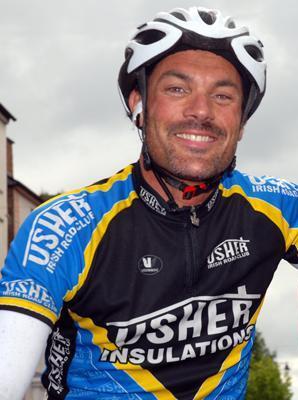
Elite executive coach. Linus spent 25+ years as a CEO in technology and services, where the businesses he led averaged 45% annual growth, and has coached hundreds of people from more than 20 countries. He is a former Irish National Cycling Champion.
Book a 30-minute strategy call
Related parts
 Part 8 of 30 · Chapter 4Temptations of successful leaders: audit the win before it audits you
 Part 28 of 30 · Chapter 10Why feedback may fail: it usually breaks before you open your mouth
 Part 11 of 30 · Chapter 5The price tag of leadership: agree the price before the seat sends the invoice
 Part 26 of 30 · Chapter 4Leadership pitfalls: isolation, signal overload and short-term tunnel vision