The 30-part series · Part 18 of 30
Creating change: a roadmap that lines up head, heart and habit
Focus area 18: Creating change: a roadmap. Chapter 6: Leading change.
Part of the Executive Coaching Methodology: Set direction and keep it moving

The roadmap I see most often in boardrooms is a slide. It has phases, swim lanes and a launch date, and it is usually correct. What it rarely has is a theory of why anyone outside the room would change what they do this week. The plan assumes that once people understand, they will move. Some will. Most will wait to see whether you mean it.
I have led change as a chief executive and I now sit beside leaders while they try it. The pattern that separates change that sticks from change that fades is not the quality of the analysis. It is whether three things move together: what people believe is true, what they feel is worth the cost, and what they actually do differently. Head, heart and habit.
Here is my claim. Change sticks when you layer data for reason, story for emotion and pilots for action — and when you spread it through a committed group of early champions until it tips, rather than announcing it to everyone at once. Announcing to everyone burns political capital you will need later, on the people who were never going to move first.
This article goes deeper on one focus area from the chapter Leading change. The chapter lays out a full stage-by-stage map. Here I want to look at the two things that most roadmaps miss: how to load the three layers at the same time, and how adoption actually spreads.
Why most roadmaps fail on the same three counts
The failure rates are well known, and they are sobering. Harold Sirkin, Perry Keenan and Alan Jackson wrote in 2005 that in most organisations, two out of three transformation initiatives fail. A decade later, McKinsey’s global survey found that just 26 percent of respondents said the transformations they knew best had been very or completely successful at both improving performance and sustaining it.
When I look at the roadmaps behind those numbers, they tend to fail in one of three ways, and each maps to a missing layer.
All head. The case is airtight, the model is clean, and nobody cares. People comply while you are in the room and drift back when you leave. The plan explained why the change is right, but never why it should matter to the person being asked to make it.
All heart. The town hall was moving, the video was good, and three months later nothing on the shop floor is different. Energy without a mechanism decays.
All habit. A new system, a new process, a new form to fill in, and no explanation anyone believes. People route around it, because a habit imposed without reason or meaning feels like control.
The fix is not to do all three in sequence. It is to load all three from the first fortnight, in proportions that suit the audience.
Layer one, two, three: data, story, pilots
| Layer | The question it answers | Main tool | What goes wrong if it is missing | practical behaviour |
|---|---|---|---|---|
| Head (reason) | Is this true, and is it necessary? | Data people can check for themselves | Compliance without belief; the plan is re-argued at every meeting | Share one number the sceptics can verify, not a dashboard |
| Heart (emotion) | Why does this matter to me and the people I serve? | A short, repeatable story with a real customer or colleague in it | Understanding without energy; nobody volunteers | Open the meeting with the story before the slides |
| Habit (action) | What do I do differently this week? | A small pilot with a visible result | Belief without behaviour; the change lives on posters | Name the one thing that will be done differently, by whom, by Friday |
Data. Senior teams usually need the reason first. The test of good change data is whether a sceptic can check it without your help. One verifiable number that shows the cost of standing still does more than a forty-page appendix, and it should connect to a target people already own — the discipline I describe in setting goals that change behaviour.
Story. Most organisations outside the top floor need to feel the change before they will analyse it. A good change story is short enough to repeat in a corridor, and it has a real person in it — a customer who left, a colleague who was let down by the old way. Communication matters more than most leaders expect. In McKinsey’s 2015 survey, where senior managers communicated openly about the transformation’s progress, respondents were 8.0 times as likely to report success. Note the word progress. The story is not told once at the launch; it is retold every time something moves.
Pilots. This is the layer most roadmaps skip, because it feels slow. It is the opposite. A pilot gives you evidence for the head, a story for the heart and a habit people can copy. McKinsey’s change team made the same point about tools: the best ones are rolled out only after successful pilots, with feedback from users built in so they feel ownership. That ownership matters. The same article found that when people are truly invested in change, it is 30 percent more likely to stick.
One more layer sits on top of all three: you. The same 2015 survey found that when senior leaders role-modelled the behaviour changes they asked for, transformations were 5.3 times more likely to succeed. It also found a gap worth sitting with: 86 percent of leaders said they had role-modelled the change, but only half of the employees who were part of it without an active role said the same. Your diary is the most visible pilot in the company.
From early champions to late adopters
The second thing most roadmaps miss is the shape of adoption. The plan treats the organisation as one audience that will move together after the launch. It never does. A few people move first, a larger group watches them, and the last group moves only when the new way has become the default.
That has a practical consequence. You do not need to convince everyone. You need to convince enough of the right people that the rest follow. Damon Centola’s experiments at the University of Pennsylvania put a number on it for social norms: when a committed minority reached roughly 25 percent of the group, it was consistently able to establish a new norm.
Below that, efforts failed. In one trial, a single extra person made the difference between success and failure. The researchers are careful that the exact figure depends on circumstances, and a laboratory naming game is not a company. But the shape of the finding is what matters to a leader: change tends to look as though it is failing just before it tips.
So I build the roadmap around four stages of spread, not four phases of activity.
| Stage | Who is moving | What you do | What you avoid |
|---|---|---|---|
| Pilot | One team or site, chosen because the sceptics respect it | Run the new way for real, measure it honestly, collect the story | Picking the easiest unit, where a win convinces nobody |
| Champions | Respected operators who have seen the pilot | Give them ownership of the next rollout, not a script | A coalition of the already converted |
| Tipping point | Enough people that the new way looks normal | Make the old way inconvenient; publish progress widely | Declaring victory and moving the champions on |
| Default | Late adopters, who move because everyone else has | Anchor it in hiring, promotion, budgets and meeting rhythms | Forcing them early and spending capital you do not need to spend |
This is how you avoid burning political capital. Every forced conversion of a late adopter before the tipping point costs goodwill and produces resentful compliance. After the tipping point, most of them move on their own, because the new way has simply become how things are done. Save your capital for the few who still will not move, which is a different conversation.
Arguments
The case for
The evidence supports layering over sequencing. The failure rates from Sirkin and from McKinsey show that analysis alone does not carry change. McKinsey’s findings on communication of progress and on leaders role-modelling the change show that the heart and habit layers, and the leader’s own behaviour, carry much of the weight. Their finding that invested people make change 30 percent more likely to stick supports pilots that give people ownership. And Centola’s tipping-point work supports building through champions rather than broadcasting to all.
There is a practical argument too. Pilots reduce the cost of being wrong. If the first site shows the plan does not work, you have lost one quarter in one place, not a year across the company.
The case against
The strongest objection is speed. Some changes cannot wait for a pilot and a coalition: a regulatory deadline, a cash crisis, a market that has already moved. In those cases a staged rollout looks like a luxury, and a leader who pilots while the house burns is not being careful. They are being slow.
A second objection is that pilots can become a hiding place. Permanent pilots let everyone avoid the hard decision to make the new way the default. I have seen organisations with a dozen successful pilots and no change.
A third is that the tipping-point idea can be over-applied. A quarter of a laboratory group agreeing on a name is not a quarter of a workforce adopting a new operating model, and treating the number as a target invites false precision.
When are the objectors right? In a genuine crisis, decide fast and explain later — but still pick one place to prove it works before you mandate it everywhere. And if a pilot has worked and nobody will make it the default, the problem is not the roadmap. It is a decision that someone is avoiding.
Where I stand
I hold the thesis for most change at senior level, with a time limit. I want a first default within roughly ninety days, not an open-ended pilot. In my 7-step coaching process, the head layer sits in Vision, where we define the destination and the metrics. The heart and spread work is the Influence step: storytelling, stakeholder work and the early, visible wins that build momentum. Pilots and the new habits are the Improvement step, and anchoring the new default in the operating model is Impact and Results.
If the situation is a true emergency, I will help a leader mandate. Otherwise I will push for one pilot the sceptics respect, a coalition with standing, and the patience to let the change tip.
Try this
Build a one-page roadmap with your senior team in a single working session.
- Write the head line. One fact about the cost of standing still that a sceptic could verify without help.
- Write the heart line. One story, under a hundred words, with a real customer or colleague in it. Read it aloud. If it does not land in the room, it will not land in the corridor.
- Choose the pilot. One team or site the sceptics respect, a leader who wants it, and a result visible within about ninety days.
- Name the champions. Five to eight people with standing, including at least one credible sceptic. Give each of them something to own.
- Define the tipping signal. What would tell you the new way now looks normal — a share of teams using it, a metric, a meeting that runs the new way without prompting?
- Write the anchor. One people system — hiring, promotion, bonus or budget — that will change once the tipping signal arrives.
Then ask yourselves:
- Which layer does our current plan lean on, and which have we left empty?
- Who would the sceptics watch, and is that where our pilot is?
- Which leader’s diary would show the change first, and is it mine?
- Where are we spending political capital on late adopters before we need to?
- What pilot have we let run so long that it has become a hiding place?
Where to go next
A roadmap is only as good as the weekly rituals that carry it, which I cover in Momentum breakers vs. makers. The pilot stage is where the first real pushback arrives, which is Handle resistance. The story layer depends on a vision people can repeat, so Transfer vision effectively is the natural companion.
Athletes understand pilots instinctively: you test a change in training long before you trust it in a race. I wrote about that translation on from elite sport to the boardroom, and Chris Hoy’s story of a launch he refused to pretend was finished is worth reading in his profile. If you want help building the roadmap with your leadership team, that is the work of executive coaching and executive team coaching. Or book a 30-minute conversation and bring the slide you already have.
Questions I am asked
Should I start with the data or the story?
Start with the data in the room where decisions are made, and the story everywhere else. Senior teams usually need the reason before they will commit; the wider organisation usually needs to feel why it matters before the numbers mean anything. But do not run them in sequence for months. Within the first fortnight I want a fact people can check, a story they can repeat and a pilot they can watch.
How do I choose the first pilot?
Pick a place where the change matters, the leader is willing, and a result will be visible within about ninety days. Avoid your easiest unit, because a win there convinces nobody. Avoid your hardest, because a loss there kills the idea. Choose the place the sceptics respect. If it works there, you have evidence and a story at the same time.
What if the champions are all the usual enthusiasts?
Then you have a fan club, not a coalition. Early champions need standing with the people who have not moved yet. I look for respected operators, a credible sceptic or two, and someone from the part of the business that was burned by the last programme. If the champions only convince each other, the change will stall just short of the tipping point and look as though it failed.
Does this roadmap work for a personal change as well as an organisational one?
The spine is the same. Head: what do I now believe is true about my role? Heart: why does this matter enough to me to pay the cost? Habit: what will I do differently this week, in a small pilot, before I announce anything? I use it with leaders moving from founder to chief executive, and with athletes moving into business. Small, visible proof beats a big declaration.
Sources
- How to beat the transformation odds — McKinsey & Company, 1 April 2015
- Changing change management — McKinsey & Company, 1 July 2015
- The Hard Side of Change Management — Harvard Business Review, October 2005
- Tipping point for large-scale social change? Just 25 percent — Penn Today, University of Pennsylvania, 6 June 2018
- Switch: How to Change Things When Change Is Hard — Heath Brothers (Broadway Books), 2010
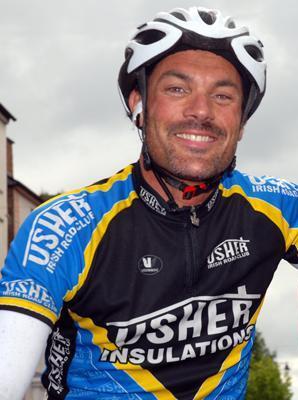
Elite executive coach. Linus spent 25+ years as a CEO in technology and services, where the businesses he led averaged 45% annual growth, and has coached hundreds of people from more than 20 countries. He is a former Irish National Cycling Champion.
Book a 30-minute strategy call
Related parts
 Part 12 of 30 · Chapter 3Goal setting successfully: hard goals, short horizons and the side effects nobody mentions
 Part 13 of 30 · Chapter 6Momentum breakers vs. makers: audit the rituals, not the mood
 Part 19 of 30 · Chapter 6Handle resistance: treat pushback as unpaid design work
 Part 1 of 30 · Chapter 3Transfer vision effectively: the real test happens two levels below you