The 30-part series · Part 21 of 30
Earning trust: the three proofs people check before they back you under stress
Focus area 21: Earning trust. Chapter 9: Trust under pressure.
Part of the Executive Coaching Methodology: Lead when it gets hard

The question I hear most often about trust is the wrong one. A CEO asks how to build a culture of trust, as if it were a project with a launch date. Meanwhile the team is answering a much smaller question every day: did you do what you said, when you said, in a way that helped someone other than you? That question gets answered in the working week, not at an offsite.
Trust is compound interest. Each kept promise earns a little, and the earnings fund the next harder ask. Each broken one taxes the next conversation, even when you were busy and they said they understood. They did understand. They also updated the file.
My claim in this article is simple. Trust is paid on three proofs: capability, consistency and care. Most senior leaders are strong on one or two and wobble on the third. The leaders who find their wobble and repair it where others can see earn backing under stress faster than the leaders who try to be liked. This goes one level deeper than the trust section of the chapter on trust under pressure, and it is the floor for the two siblings that follow it.
Trust is compound interest, not a mood
When I was running businesses across countries, I learned that trust was not what people said about me in a survey. It was whether a country managing director still brought me a bad forecast the month after I had been sharp with him. That is the only measure that matters at the top: will people tell you the truth early, and will they still execute when you need them to take a risk on your word?
Compound interest has two properties that leaders forget. It is slow at the start, and it is brutal in reverse. A new CEO who makes ten small promises and keeps nine has not earned 90% of anything. They have taught the room that one in ten of their dates is decoration. The room will price that into every commitment that follows.
The second property is that the balance is drawn on under stress. Nobody tests your trust when the quarter is fine. They test it in the restructure, the missed number, the acquisition that surprises the market. If the deposits were not made in the calm weeks, the withdrawal fails in the loud one. That is why the focus area says the aim is that stakeholders back you even under stress. Stress is when the ledger is audited.
Three proofs: capability, consistency and care
The original focus area names the three: capability (deliver), consistency (keep promises) and care (serve others’ wins). I like those words because they are behavioural. You cannot fake any of them for long, and you can practise all of them this week.
The research lands in the same place under different labels. Jack Zenger and Joseph Folkman looked at 360-degree data on 87,000 leaders and found three clusters that predicted trust: positive relationships, consistency, and judgement with expertise. Leaders who scored at or above the 60th percentile on all three had an overall trust score at the 80th percentile. Positive relationships carried the most weight: without them, trust ratings fell furthest. In plain terms, competence and reliability are not enough if people do not believe you are for them.
Frances Frei and Anne Morriss describe a trust triangle of authenticity, logic and empathy, and add a useful idea: most people have a trust wobble, the one driver that fails them first, especially under stress. I use that word in coaching because it removes the drama. You are not untrustworthy. You wobble on one proof, and you can find it.
| Proof | What people are checking | A weekly deposit | A typical withdrawal | What to inspect in 30 days |
|---|---|---|---|---|
| Capability | Can you do the job in front of you? | You frame one live decision clearly and land it | You talk strategy while the operating problem drifts | One problem the team saw you solve, not describe |
| Consistency | Do your word and your diary match? | You hit a date, or renegotiate before it passes | You miss and explain, then miss again | A visible promise log with dates kept |
| Care | Are other people’s wins in your frame? | You name someone’s work in the room that has power | You absorb the win and share the blame | Someone else can say who did the work |
The table looks obvious. It is not how most leaders spend their week. A pattern I see often in strong operators is high capability, decent consistency and thin care. They deliver, they keep their own dates, and they treat people as inventory for the plan. The team respects them and does not back them. When the bad quarter arrives, the people who could have saved it are quietly polishing their CVs.
The opposite pattern exists too. Imagine a CEO who is warm, generous with credit and genuinely kind, but who moves the date on every commitment. People like her. They do not plan around her. Care without consistency becomes a pleasant fog.
Under stress, the ledger is audited
There is a reason trust deserves board attention rather than a culture slide. Paul Zak’s research on trust inside companies found that, compared with people at low-trust companies, people at high-trust companies report 74% less stress, 106% more energy at work, 50% higher productivity, 13% fewer sick days, 76% more engagement and 40% less burnout. These are self-reports, and I treat them as directional, not as a forecast for your business. But the direction is hard to ignore.
The person in the middle of that equation is usually the manager. Gallup found that managers account for at least 70% of the variance in employee engagement scores, and in a study of 7,272 U.S. adults, one in two had left a job to get away from a manager at some point in their career. At senior level the same thing happens with better manners. Executives do not resign from a company. They resign from a leader they no longer trust, and they rarely tell you that is the reason.
Stress also changes what people notice. In the calm weeks, a missed date reads as busyness. In a restructure, the same miss reads as a signal about what you will do to them. That is unfair, and it is the job. The leader who wants backing under stress has to make deposits that are visible before the stress arrives, because nobody believes a new behaviour that appears on the day you need it.
What does that look like in the working week?
- Capability: pick one operating problem the team can see, and close it. Not the strategy. The problem that has been on the ops agenda for three weeks.
- Consistency: write down every promise you make in meetings this week, with a date. Keep the list where your chief of staff or assistant can see it.
- Care: before the next leadership meeting, decide whose work you will name, and name it specifically, in front of the people who decide their future.
None of this is a personality change. It is a ledger you can audit. The catch is that you cannot audit it alone. The withdrawals you make without noticing are, by definition, among the common leadership blind spots that success hides from you.
Arguments
The case for
Trust behaves like compound interest because people update on evidence, not on intention. The data points the same way across very different methods: 360 reviews of tens of thousands of leaders, neuroscience-informed workplace surveys, and large engagement studies. When people trust their leader, they bring problems earlier, take smarter risks and stay longer. That is commercial, not soft.
The three-proof frame also does something practical. It turns a vague feeling (people do not trust me) into a diagnosis (they trust my competence and doubt my care). A diagnosis can be worked. A feeling can only be worried about. In my experience, leaders who name their wobble change faster, because they stop trying to fix all of themselves at once.
The case against
The strongest objection is that trust is not earned through deposits at all. It is granted or withheld based on history, identity and context the leader cannot control. A new CEO walking into a company that was lied to by the previous one will not be trusted on day one, whatever she does. That is true, and the deposits will take longer.
A second objection: focusing on trust can make leaders soft. They avoid the hard call to protect the relationship, and call it trust. I have watched this. A CEO keeps an underperformer for a year to protect trust, and the rest of the team concludes that standards are negotiable. In that case the pursuit of trust destroyed it.
A third: in a crisis, people follow capability, full stop. They will tolerate a cold leader who saves the company. Sometimes the opposite of the thesis is true, and care can wait.
Where I stand
I accept the first objection and use it. If inherited distrust is high, make smaller promises and keep them more visibly. The ledger still works. It just starts in debt.
The second objection is not an argument against trust. It is a description of confusing trust with comfort. Real trust includes the hard conversation, which is why having tough conversations comes next. And on the third, I agree that capability buys you the first weeks of a crisis. It does not buy you the recovery. People who were treated as inventory during the rescue leave as soon as the rescue is over.
In the seven-step process, this work sits in step 2, Awareness, where a Trusted Feedback Loop shows which proof you wobble on, and in step 4, Influence, where trust protocols turn into how the team actually works together. I would not start with a trust workshop. I would start with the data on you.
Try this: the trust wobble audit
This takes about a fortnight and needs three people who will be straight with you.
- Pick three relationships that matter under stress. A direct report, a peer or chair, and someone two levels down who sees how your decisions land.
- Ask one question each, privately. On capability, consistency and care, which have I been weakest on in the last quarter, and what did you see? Then be quiet and write down what they say. If you defend, explain or thank them too warmly, you will get a safer answer next time, which is exactly why feedback may fail at senior level.
- Look for the repeated word. If two of three name the same proof, that is your wobble. Do not argue with it.
- Choose one 30-day proof. Make it specific and visible: a promise log the team can see, a protected one-to-one you never move, or one operating problem you close in public.
- Tell the three people what you are changing. Ask them to tell you, in 30 days, whether they noticed. If they did not notice, it did not happen.
- Repeat with the same three people. Trust is not a campaign. It is a repetition.
Some questions to sit with:
- Where, in the last quarter, did I spend trust I had not earned?
- Which of my promises do people already discount, and how would I know?
- Whose win have I absorbed recently without naming them?
- If my team had to bet their bonus on my next date, would they?
- What would I need to stop doing, not start, to make my care visible?
Where to go next
This part is the base of the chapter. When trust is in place, you can afford the conversation you have been postponing, and that is where have tough conversations picks up. When the conversation is done, the trust you earned gets spent on a call only you can make, which is the subject of make tough decisions. Trust is also the engine of loyalty, so if retention is the live problem, read create loyalty in your organisation.
Elite sport taught me the same lesson with less ambiguity. In a breakaway you share the work only with riders whose word holds when the legs hurt, and I write about how that transfers in from elite sport to the boardroom. If you want help finding your wobble with real data rather than guesswork, that is the opening work of executive coaching. Book a conversation and bring the relationship where trust feels thinnest.
Questions I am asked
Can I earn trust quickly as a new CEO?
Not quickly, but visibly. In the first 90 days I would make small promises with dates and keep every one, show competence on one live problem rather than on a strategy deck, and make one call that clearly serves someone else’s win. People are not grading your vision yet. They are checking whether your word and your diary match.
What if my team trusts my competence but not my care?
That is the most common pattern I see in high-performing operators. The repair is not a warmer tone. It is calendar evidence: protected one-to-ones, credit named in the room that has power, and decision rights that stay given. Care is proved by what you give up for someone else, not by how you speak to them.
How do I rebuild trust after a broken promise?
Name the specific promise, not a general apology. Say what it cost them, what you are changing, and the next proof with a date. Then keep that proof when it is inconvenient. A short, inspectable sequence rebuilds more than a long, sincere speech, because people trust what they can check.
Is trust the same as being liked?
No. Being liked is a mood in the room. Trust is whether people will still bring you the downside, and still execute, when the news is bad. I have seen well-liked leaders with thin trust and demanding leaders with deep trust. The difference was kept promises, not charm.
Sources
- The 3 Elements of Trust — Harvard Business Review, 5 February 2019
- The Neuroscience of Trust — Harvard Business Review, January 2017
- Begin with Trust — Harvard Business Review, May 2020
- Employees Want a Lot More From Their Managers — Gallup, 8 April 2015
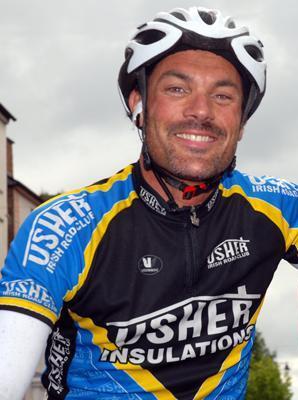
Elite executive coach. Linus spent 25+ years as a CEO in technology and services, where the businesses he led averaged 45% annual growth, and has coached hundreds of people from more than 20 countries. He is a former Irish National Cycling Champion.
Book a 30-minute strategy call
Related parts
 Part 4 of 30 · Chapter 2Common leadership blind spots: selective listening, silo loyalty and hero syndrome
 Part 22 of 30 · Chapter 9Have tough conversations: hard truth, delivered well, deepens respect
 Part 28 of 30 · Chapter 10Why feedback may fail: it usually breaks before you open your mouth
 Part 30 of 30 · Chapter 9Make tough decisions: sort the door before you walk through it