The 30-part series · Part 14 of 30
Get good people around you: a scorecard, a real interview and a 30-day sprint
Focus area 14: Get good people around you. Chapter 7: Getting good people around you.
Part of the Executive Coaching Methodology: Build the side that can win

Most senior hiring decisions I have watched go wrong did not fail at the offer. They failed weeks earlier, when nobody wrote down what the person was actually for. The search started with a title, a salary band and a vague sense of “someone strong”. The interviews became conversations about careers. The candidate who told the best story won. Six months later, the chief executive was quietly doing half the new hire’s job and calling it support.
I have hired well and I have hired badly across 25 years running businesses. The difference was rarely the labour market. It was whether I had done the boring design work before I met anyone. When I had a one-page scorecard, a disciplined interview and a plan for the first month, the hire usually compounded. When I trusted my instinct for “presence”, I usually bought a performance.
So here is the claim. Getting good people around you is a design job, not a hunt. Write the scorecard before the search. Test the work, not the performance, in the interview. Run the first 30 days as a sprint. Do those three things and good people start adding value — and culture — before the first month closes.
This article goes deeper on one focus area from the chapter Getting good people around you. The chapter covers why serious people read the chief executive, the load and the standard before they believe your offer. Here I want to stay with the mechanics.
Why a few people change the maths
At the top of a company, the gap between an adequate hire and a strong one is not marginal. McKinsey, drawing on a study of more than 600,000 researchers, entertainers, politicians and athletes, reported that high performers are 400 per cent more productive than average ones, and that in highly complex occupations such as management and software development the gap rises to 800 per cent. I treat those figures as a direction, not a forecast for your next hire. But the direction matters. Senior roles are complex roles. The variance is wide, and you live inside it.
That is why “get good people around you” is not an HR slogan. It is a capital allocation decision. A chief financial officer, a chief operating officer or a country head shapes hundreds of decisions you will never see. Getting that seat right is worth more of your time than almost any board paper.
It is also why the manager matters as much as the hire. Gallup found that one in two U.S. adults in a study of 7,272 had left a job to get away from their manager. You can run a flawless search and still lose the person in a year if the leader they report to is the problem. The design work below includes you.
The scorecard before the search
A scorecard is one page. It answers three questions in plain English before a single CV arrives.
- What must this person deliver? Three to five outcomes for the first year, each with a measure. “Rebuild the pricing model so gross margin recovers two points by Q4” is an outcome. “Drive commercial excellence” is a wish.
- What will make those outcomes likely? Four to six competencies, specific to this seat. Not a generic list of leadership virtues. If the outcome is a turnaround of a demoralised sales team, I want evidence of having done exactly that, not “strong communicator”.
- What will I see in the interview if they have it? For each competency, a short description of a strong answer and a weak one.
Then I add two lines most companies leave out. The decisions this person will own from day one, and the ones I will keep. And one live problem already on the table that they will inherit. If I cannot write those lines, I am not ready to hire. The best candidates will ask about both, and they can tell when I am improvising.
| Element | Theatre version | Working version |
|---|---|---|
| Purpose of the role | A title and a list of duties | Three to five outcomes with measures for year one |
| Competencies | “Strategic, collaborative, resilient” | Four to six capabilities that make those outcomes likely in this seat |
| Evidence | “We’ll know it when we see it” | Written anchors for a strong and a weak answer, agreed before interviews |
| Decision rights | Left vague so the chief executive keeps options | Named decisions the hire owns, and named ones I keep |
| The inherited problem | Hidden until week three | Described in the first conversation |
| Culture | “Must be a good fit” | Two or three behaviours I will test for, such as owning a miss in plain language |
The practical behaviour here is small. Before you brief a search firm, sit with the scorecard for an hour and send it to two people who will work with the hire — not for them. Ask them what is missing. Their edits are often the most useful part of the whole search.
Interview fidelity: test the work, not the performance
Interview fidelity is my phrase for how faithfully the interview predicts the job. Most senior interviews have very low fidelity. They reward fluency, confidence and a good story about the last role. Those are real skills. They are not the job.
Google’s re:Work guidance describes structured interviewing simply: use the same interviewing methods to assess candidates for the same job — the same questions, the same scale, decisions against predetermined qualifications. The same guide is blunt about why this is rarer than it should be. Most interviewers believe they are good judges of character. And in first encounters we make quick, unconscious judgements, then spend the rest of the hour hunting for evidence that confirms them. Psychologists call that confirmation bias. I have caught myself doing it more times than I would like.
What raises fidelity in practice:
- Split the scorecard across the panel. Each interviewer owns one or two competencies and goes deep. Nobody asks “tell me about yourself” four times.
- Ask for evidence, then ask again. “Tell me about a time you inherited a team that was missing its number.” Then: what did you do in the first fortnight, who disagreed, what did it cost, what would the team say? Strong candidates get more specific under follow-up. Weak ones get more general.
- Put a live problem in the room. Share a version of the real inherited problem and watch how they work it. Do they try to understand the constraint, or try to impress you? Do they ask who else is affected?
- Score before you talk. Every interviewer writes a score against the anchors before the debrief. Otherwise the most senior voice in the room becomes the score.
- Reference the work, not the warmth. Ask referees about a specific outcome on the scorecard, and ask at least one person who reported to the candidate.
A good interview is also the earliest place to see the difference between owning a miss and narrating one. Ask about a failure and listen for the pronoun. None of this makes the decision for you. It makes the decision honest. When the panel disagrees, you are disagreeing about evidence rather than impressions, which is a far better argument to have.
The first 30 days: an onboarding sprint
Most organisations invest heavily in the search and then treat the first month as administration. Gallup found that only 12% of employees strongly agree that their organisation does a great job onboarding new employees. At senior level, the cost of that gap is not a confused new starter. It is a leader who spends a quarter learning the politics instead of moving the work.
I prefer to run the first 30 days as a sprint with four parts:
- Week one: the map. Ten to fifteen conversations I have set up in advance — key customers, the people they inherit, peers who depend on them, one board member if relevant. Each conversation has the same three questions: what is working, what is not, what should I not change yet?
- Week two: the contained problem. One real problem from the scorecard, small enough to move in a month and visible enough to matter, with a target written the way goal setting that actually works demands: specific and stretching. Not a strategy review. A decision.
- Week three: first proof. A visible step on that problem, shared with the team. Early, honest progress earns more trust than a polished plan.
- Week four: the read-back. The new leader tells me and the executive team what they see, including what they think I am getting wrong. I want that conversation in week four, not month nine.
Through all of it, a weekly 30-minute meeting with me. Gallup’s manager research found that employees whose managers hold regular meetings with them are almost three times as likely to be engaged. A new senior hire is no exception. They just pretend to need it less.
This is the same idea elite teams apply to a new rider joining mid-season: a clear role on a specific race, early feedback, and a manager who is present. I wrote more about that bridge on from elite sport to the boardroom, and in what elite sport taught me about boardroom performance.
Arguments
The case for
The evidence on selection is unusually consistent. Structured methods beat unstructured conversation, and the gap between strong and average performers in complex roles is large. A scorecard forces you to decide what you need before charm enters the room. A disciplined interview turns opinion into evidence. A designed first month shortens the time to value and tells the new leader, from the first day, that the standard here is real. Each step is cheap compared with a senior mis-hire, which usually costs a year of drift and a second search.
The case against
The strongest objection is that senior roles are too fluid for a scorecard. Strategy will change in six months, so why lock in outcomes now? A second objection is that structure feels cold to senior candidates, who expect a conversation between peers and may walk away from something that feels like an exam. A third is speed: in a competitive market, the company that decides in a week beats the company running a careful process. All three are fair. And sometimes the opposite is true: a founder hiring a long-trusted former colleague into a crisis seat may rightly move on judgement alone, because the evidence already exists from years of shared work.
Where I stand
I keep the structure and make it lighter, not looser. A scorecard can be revised — on paper, with a reason — when strategy moves. Candidates who are put off by a serious interview are telling you something useful, and in my experience the strong ones lean in. Speed comes from preparation, not from skipping steps: a scorecard written in an afternoon and a panel briefed in an hour is faster than ten unfocused meetings.
In my seven-step process, this work sits in step 4, Influence, because leadership scales through people. It lands in step 6, Impact, when you can link the hire to a measured outcome. I often start it with step 2, Awareness: what has your own pattern of hiring been, and what have you been buying? A repeated mis-hire is usually one of the leadership blind spots you cannot define alone.
Try this
Pick the next senior seat you expect to fill, or one filled in the last year that has not worked as hoped.
- Write a one-page scorecard: three to five outcomes with measures, four to six competencies, and a line on what a strong and a weak answer would sound like for each.
- Add the decisions the role owns, the ones you keep, and the problem they will inherit.
- Send it to two people who will work alongside the hire. Ask what is missing or wrong.
- Design a four-person panel, each owning part of the scorecard, each scoring before the debrief.
- Sketch the first 30 days on a page: the map, the contained problem, the first proof, the read-back.
Then sit with these questions:
- What did my last three senior hires have in common at interview, and what did they have in common a year later?
- Where have I hired for presence and hoped for ownership?
- Which decisions do I say I will hand over but tend to snatch back?
- Would a strong candidate, knowing how this company handles a miss, take this job?
- Who on my team could say, honestly, that I onboarded them well?
Where to go next
Hiring is only half of getting good people around you. The other half is telling, over time, who is raising the standard and who is managing the impression of it. That is the subject of the next part, players vs. pretenders. Keeping the right people once they arrive is the subject of create loyalty in your organisation. If the seat you are filling will sit at a table that already struggles to decide, read build high-performance teams too.
If the constraint is less the candidate and more the table they will join, that is work I do as executive team coaching. If it is your own pattern as the person who hires, it belongs in executive coaching. Either way, book a 30-minute strategy call and bring one seat and one scorecard, however rough.
Questions I am asked
Is a scorecard just a job description with a new name?
No. A job description lists duties and could belong to anyone. A scorecard names three to five outcomes this person must deliver in the first year, the few competencies that make those outcomes likely, and what evidence would convince me in an interview. If I cannot write it on one page, I am not ready to hire. I am ready to hope.
How many interviewers should a senior hire see?
Fewer than most companies use, and better prepared. I prefer three or four people, each assigned one part of the scorecard, each scoring against the same written anchors before they talk to each other. Ten loosely briefed conversations produce ten impressions. Four focused ones produce evidence, and the candidate respects the seriousness.
What if the best candidate fails one part of the scorecard?
Then I decide in the open whether that part matters. Sometimes the scorecard was wrong, and I change it on paper, with a reason. What I do not do is quietly ignore it because I like the person. That is how charm beats evidence, and it is the most expensive habit in senior hiring.
Does an onboarding sprint put too much pressure on a new leader?
Not if it is designed well. The sprint gives a new leader one contained problem, the people and data to solve it, and a weekly check-in with me. Pressure comes from vagueness: no decision rights, no clear first win, no one asking how it is going. Clarity is a kindness to a new senior hire, not a test.
Sources
- Attracting and retaining the right talent — McKinsey & Company, 24 November 2017
- Guide: Use structured interviewing (re:Work) — Google re:Work (archived 17 May 2023), 17 May 2023
- Why the Onboarding Experience Is Key for Retention — Gallup, 16 May 2018
- Employees Want a Lot More From Their Managers — Gallup, 8 April 2015
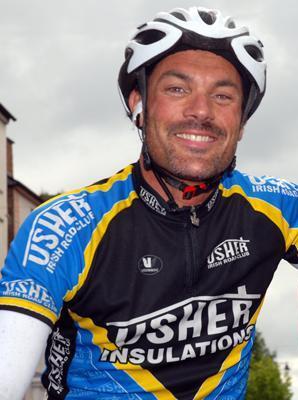
Elite executive coach. Linus spent 25+ years as a CEO in technology and services, where the businesses he led averaged 45% annual growth, and has coached hundreds of people from more than 20 countries. He is a former Irish National Cycling Champion.
Book a 30-minute strategy call
Related parts
 Part 15 of 30 · Chapter 7Players vs. pretenders: make ownership visible, and the performance fades
 Part 12 of 30 · Chapter 3Goal setting successfully: hard goals, short horizons and the side effects nobody mentions
 Part 3 of 30 · Chapter 2Define leadership blind spots: find the point where a strength tips over
 Part 29 of 30 · Chapter 7Create loyalty in your organisation: a path, a thank-you and a share