Why Coach the Executive Team, Not Just the CEO

Coaching only the CEO leaves the system untouched. A sharper chair with the same silent table is still a single point of failure. I run a dedicated executive team coaching track because I have led and upgraded leadership groups while scaling—and because I have watched expensive 1:1 work die in the first meeting after the offsite.
The commercial case is not “team building.” It is decision speed, shared ownership and a culture that does not require a hero.
The one-hero tax on growth companies
Growth companies worship the founder or the operator who can still personally rescue the week. The tax arrives later: every exception comes back to that person, the bench never learns irreversible calls, and the board still has one throat to choke.
I have been that hero. It feels like love for the company. It is a design failure. When I work 1:1, I am often working the aftershock of a team that will not decide. CEO coaching can sharpen the chief executive. It cannot make six people tell each other the truth.
Founders in the title-to-OS shift hit this immediately. They hire “A-players” and keep the real meeting in their head. The team performs alignment. The company stays a solo act with a payroll. Hiring is a design job too, and I cover how to get good people around you, from scorecard to first month, separately.
What team coaching changes that 1:1 cannot
Team coaching changes the room: how asks are framed, how dissent is used, who owns the follow-through, and what happens when someone misses.
In a 1:1 I can help a CEO see that they snatch the wheel. In the team I can watch them do it, and watch the table invite it. That is a different data set. It is why self- and team-awareness has to become a practice, not a personality score.
Team coaching also builds artefacts the company can keep: decision rights, a working scoreboard, a rule for late surprises, a way to run a hard conversation without turning it into a trial. 1:1 work produces a person who knows those things. Team work produces a table that uses them.
I do not promise a high-performing leadership team. I do insist on inspectable behaviour in the room we are actually in. The guide sets out how high-performance teams are built as an operating rhythm, not a talent mix.

If the real meeting still happens after this one, you are coaching the wrong unit.
Conditions that must be true before you start
Do not buy team coaching as a mood.
The CEO must want a team that can disagree with them in the room. If they want a chorus, we will waste a quarter.
There must be a live enterprise problem—not a desire to “bond.” Integration after a hire, a stalled decision, a culture that cannot travel, a founder who will not step back.
The table must be the actual table. If the real power sits with an unofficial deputy or a chair who is not in the work, we will coach a theatre company.
Confidentiality has to be contracted. What stays in the room, what the board will hear, what a 1:1 with the CEO will not be used for. I will not run a team process that is secretly a performance review.
If those conditions are false, start with 1:1 executive coaching and an honest brief. Team work on a dishonest brief makes things worse.
Decision table: 1:1 only vs team coaching vs both
| Symptom | 1:1 coaching alone | Add team coaching when… | Success signal (leading) |
|---|---|---|---|
| CEO cannot land a board ask | Presence and judgement work | The execs still cannot narrate the same thesis | One sentence the table repeats without notes |
| Founder still runs every exception | Identity and decision rights | Owners exist on paper and not in the week | Severity rule used without the CEO |
| Nice meetings, late truth | Personal blind-spot work | Dissent is punished by status | A named downside in the minutes |
| Two functions at war | Private conversations | The conflict is the company’s bottleneck | A joint scoreboard and a kill date |
| Culture dies in the new country | CEO standard-setting | The table cannot hold the standard without the founder | Local lead runs Friday’s call |
Most serious engagements use both. The CEO still needs a private place to think. The team still needs a public place to practise. Isolation is not solved by adding more 1:1s.
Cadence and artefacts of a serious team engagement
I want a rhythm the company can feel.
A working session on a live decision, not a classroom. A monthly look at how the table actually ran—talk time, late surprises, decisions recycled. Artefacts: decision rights, a one-page scoreboard, a rule for psychological safety that is not niceness, and a written standard for accountability as the company scales.
Between sessions the CEO and I may still meet. That 1:1 is not a back-channel for punishing someone who spoke. If I cannot keep that line, I will not take the work.
Pressure decisions belong in this cadence. A team that cannot run four gates under load will keep sending the irreversible calls back to the chief executive—and then wondering why the chief executive looks spent.
How this supports culture that scales
Culture is what the exec table does when the CEO is on a plane. If that table only works when I am coaching the individual, you have bought a temporary personality. If the table can hold a standard, name a miss and recover a decision, you have bought a company.
That is the higher-leverage move past a certain scale. Not because teams are fashionable. Because one hero cannot travel.
Closing
Coach the chief executive when the chief executive is the constraint. Coach the table when the table is. Most companies past product-market fit need both, and they buy the first because it is quieter.
If you want to test which unit is the real brief, book a confidential 30-minute conversation.
Questions I am asked
Why isn’t coaching the CEO alone enough?
Because a sharper chief executive with the same silent table is still a single point of failure. CEO coaching can sharpen the chief executive; it cannot make six people tell each other the truth.
What needs to be in place before team coaching starts?
The CEO must want a team that can disagree with them in the room, there must be a live enterprise problem, the table must be the actual table, and confidentiality has to be contracted. If those conditions are false, start with 1:1 executive coaching and an honest brief.
Should we choose 1:1 coaching or team coaching?
Most serious engagements use both. The CEO still needs a private place to think, and the team still needs a public place to practise.
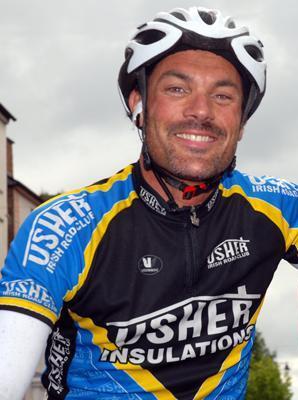
Elite executive coach