What Elite Sport Taught Me About Boardroom Performance

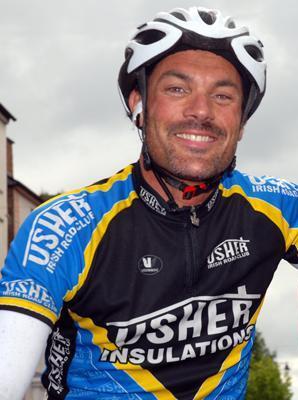
Performance is a system in a bike race and in the chair. I won an Irish national cycling championship and competed internationally; I also ran companies across more than twenty countries. The useful overlap is not motivation. It is load, feedback, a race plan, recovery and roles. The dangerous overlap is heroics. Most executives copy the wrong half.
I do not coach you to become an athlete. I coach you to stop treating the quarter like a permanent championship week.
Performance is a system in sport and in the chair
In the peloton, talent without a system gets dropped. In the boardroom, charisma without a system gets a good first meeting and a bad third quarter. The system is how you train, who tells you the truth, what you will not do on race day, and how you come down afterwards.
When Pat McQuaid—then at the top of world cycling—talked about standards, he was not talking about posters. He was talking about a bar you either met or you did not. Companies often refuse to name the bar because naming it would require a conversation.
That is why I keep personal development coaching tied to the job, not to a lifestyle brand. The thirty focus areas I use with senior leaders are a way to pick the few levers that actually change Tuesday.
Five transfers: load, feedback loops, race plan, recovery, team roles
Load. You cannot peak every week. In cycling we periodised intensity. In companies we stack travel, board cycles and product launches and then act surprised when judgment thins. Energy is a leadership system, not a slogan.
Feedback loops. A power meter does not care about your story. A good sports director will still tell you when your story is wrong. In the chair, if the only feedback is annual and flattering, you are training in the dark. Self- and team-awareness is the corporate equivalent of a clean data file.
Race plan. You do not invent tactics at kilometre 160. You decide in advance where you will spend matches. CEOs need the same: which calls are this week’s race, and which are training. Presence is the plan landing under scrutiny, not a face you put on at the start line.
Recovery. Adaptation happens after the session. Leaders who only know how to go harder eventually produce noise. Recovery is scheduled, or it is fictional.
Team roles. A road captain, a domestique, a sprinter. If everyone is a leader, no one can take a pull. Executive teams that refuse roles perform alignment and then sprint into each other.
Elite sport names a standard in public. Most boardrooms still hope the standard is obvious.
Where leaders falsely copy sport
Three misuses show up constantly.
Heroics. The CEO as lone breakaway. It looks brave and it makes the team sit up. It also teaches them not to come through. I have done it. It does not scale.
Punishment as culture. Suffering is not a strategy. In sport, suffering is a cost you pay for a designed purpose. In companies, people start wearing exhaustion as proof of belonging. That is how you get burnout risk on the scoreboard and call it commitment.
Endless intensity. Championship week, forever. No periodisation, no easy days, no technical sessions. Just another all-hands about winning. Intensity without a plan is anxiety with a logo.
If your leadership metaphors are all about crushing and leaving people behind, you are quoting sport you did not actually do at a serious level.
Decision table: sport principle → boardroom practice → misuse to avoid
| Sport principle | Boardroom translation | Misuse to avoid |
|---|---|---|
| Periodise load | Stack heavy cycles, then protect recovery weeks | Treating every month as a launch |
| Train to a number | One lead and one lag the night shift can see | Forty dashboards and no decision |
| Coach in the week, not at the banquet | Short feedback close to the meeting | Annual 360 as the only mirror |
| Race plan on paper | Four gates before an irreversible call | Inventing the ask in the room |
| Named roles in the bunch | Decision rights and who takes the pull | “We are all leaders here” |
| Come down after the event | Recovery day after board or travel | Celebratory drinks as the only decompression |
Use the middle column. Fire anyone selling you the right-hand column as “high performance.”
Building a personal performance review cadence
Athletes review the file. CEOs review the quarter if they are disciplined, the year if they are not.
I ask for a monthly personal review that is not a journal and not a brand exercise. Four questions. Which calls did I own? Where did I snatch the wheel? What load did I accept that I would not design on paper? Who told me a truth I did not enjoy?
Keep it to a page. Share none of it with the company. Share the operating consequences with the team: the decision right you are returning, the meeting you are killing, the standard you will no longer excuse.
If you have no one to review the file with, that is the loneliness design problem. Serious riders do not self-coach for long. Serious CEOs should not either—though CEO coaching is not a longer training camp. It is a working relationship on live material.
I do not promise you will “perform like a champion.” I promise we can tell whether your system would survive a real race week.
Closing
Copy the system, not the posters. Train, measure, recover, name roles, stop heroics. The chair is not a peloton—but it is not a motivational seminar either.
If you want to put a performance file on the table, book a confidential 30-minute conversation.
Elite executive coach